• Link to Facebook
  • Link to Instagram
  • Link to LinkedIn
  • Link to Youtube
  • Link to X
  • Link to Mail
About Golf
  • LEARNING GOLF
    • FOR BEGINNERS
      • Introduction to Golf
      • Golf Equipment
      • Putting
      • Short Game
      • Bunker Play
      • The Golf Swing
      • Rules & Etiquette
    • ARTICLES
      • Full Swing
      • Short Game
      • Putting
      • Bunker Play
      • Specialty Shots
      • Core Principles
      • Drills and Practice
      • Clubs & Equipment
      • Rules & Etiquette
    • VIDEOS
      • Full Swing
      • Short Game
      • Bunker Play
      • Putting
      • Specialty Shots
      • Other
    • PRACTICE DRILLS
      • Full Swing
      • Bunker Play
      • Pitching
      • Chipping
      • Putting
  • ABOUT
  • ENTREPRENEURSHIP
  • PGA TOUR
    • 2004 US Open
    • 2008 Justin Timberlake
  • PODCAST
    • Podcast Episodes
  • CONTACT
  • Click to open the search input field Search
  • Menu Menu
Putting Casey Bourque

Reading Greens and Putting Strategies
putting green reading and strategy

putting green reading and strategy

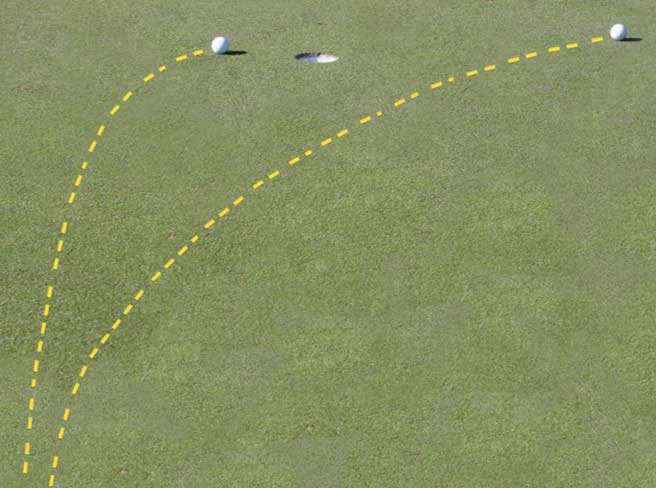
My first piece of advice for relative beginners reading the slope of greens is to double whatever break you see. Higher handicappers rarely play enough break, and resort to either hitting putts too hard, missing routinely on the low side of the hole, or both. This is a critical mistake if it’s happening with regularity.

When you miss a putt on the low side of the hole, at the very end of the putt’s travels, the ball is rolling away from the hole. Every inch that the ball rolls is an extra inch you’ll have to deal with on your next putt. Conversely, a putt missed on the high side of the hole is moving toward the hole, generally leaving you with much shorter return putts.

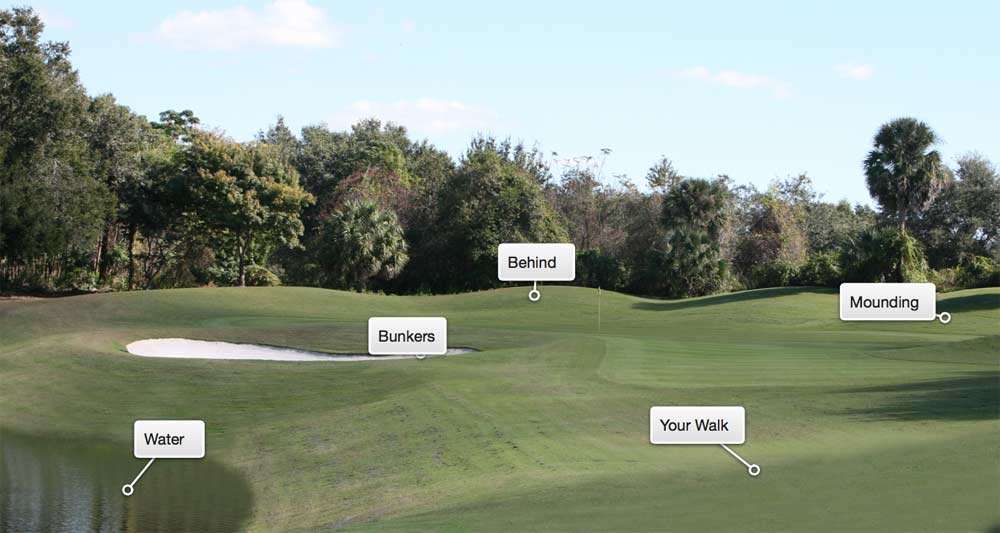
In terms of reading greens, I suggest removing your blinders and first take a look at the entire green complex and the general lay of the land. I would say just take an extra moment to think like a golf course architect. Most greens are not designed to retain water, but to drain water into sensible locations. Notice low-lying areas, drainage areas, water hazards, and other areas where it might make sense for an architect to drain the water from the green. This will give you a general pulse on the overall slope of the green.
tips for reading greens

As we take a look at your putt more specifically, it’s important to note that break is a function of the speed the ball is traveling. Generally the ball is traveling its fastest immediately after leaving the putter face and moving it’s slowest toward the end of the putt. This means that X amount of slope will have much more effect on the roll of the ball at the end of the putt than in the beginning of the putt. To this end, you should assign more value to slope around the hole than the slope near the putt’s starting point.

If time permits, take a walk over and look at the putt from behind the hole. As you crouch down, the circular hole appears to be more like a slit, or even a line on the green. Notice if this line is horizontal or if it appears to be at an angle of some kind. This will provide a strong indication of the slope around the hole.

If you’re playing on bent grass, or generally in cooler climates, then grain will not be much of a factor. If you’re putting on greens with Bermuda grass or with other heavier, grainy types of grass, take a look at the lip of the hole itself. Often, especially as the day progresses, one half of the hole will remain clean while the other half of the hole appears to be beaten up. If this is the case, this tells you that the grain of the grass is growing from the clean side to the dirty side of the hole. This happens because of the way cups are cut, with half the hole having trimmed the blades of grass, while with the other half, the roots of the grass have been severed.

As you walk around your putt, also notice the coloration in the grass. Lighter shades of green are down grain while darker shades of green are into the grain. This occurs because of how sun light reflects, or doesn’t reflect, off the blades of grass depending on your vantage point. In simple terms, consider the effects of grain on your putts much like the effects of wind on your full shots. Putts into the grain will be slow, while putts down grain will be fast. Water drainage has a large effect on the direction of grain, so this can provide yet another clue as to the slope on the green.

Once again, only if time permits, you might take a look at your putt from a side angle as well. Stand on the lower side of the putt for this, as I believe you’ll see more detail than you will from the high side. This will give you an idea of the uphill versus downhill nature of the putt and help you with speed control. Once you read your putt, be sure to play enough break, select a starting line and treat every putt as if it were straight.

In summary, most players don’t account for enough break on the putting green. Missing on the high side of the hole will help to leave you shorter return putts than missing on the low side. When reading greens, take a moment to think like an architect and look at the overall landscape considering water drainage. The amount a putt will break is a function of the speed that it is traveling. If time permits or while other are playing, take a look around the hole because this is where the ball will be traveling slowest, and perhaps breaking the most as it loses speed. Look at the hole itself and the coloration of the grass to get an idea of the direction of the grain. Once you have your read and your line, set up squarely and treat every putt as if it were straight.

September 19, 2016/by Casey Bourque
Share this entry
  • Share on Facebook
  • Share on X
  • Share on WhatsApp
  • Share on Pinterest
  • Share on LinkedIn
  • Share by Mail
https://about-golf.org/wp-content/uploads/2016/09/puttinghighlow.jpg 488 656 Casey Bourque https://www.about-golf.org/wp-content/uploads/2016/10/aboutgolflogo.png Casey Bourque2016-09-19 01:10:462020-09-05 13:23:36Reading Greens and Putting Strategies
You might also like
golf putting routine and alignment Putting – Routine and Process for Consistency
common putting grips The Most Common Putting Grips
golf pitching distance control Golf Pitching Distance Control – Leap Frog Drill
golf putting drills Putting Challenge – Pull Back and Safety Pull Back
putting stance and stroke Putting Stance and Stroke
golf up and down chipping The “Up and Down” Chipping and Putting Drill

Find What You Want

loader
Wordpress Meta Data and Taxonomies Filter

Categories

  •  
  •  
  •  
  •  
  •  
  •  
  •  
  •  
  •  
  •  
  •  
  •  
loader


Free Golf Tips & Drills


Grab my Ebook

beginnerguide

Quick Links

  • Home
  • About
  • Golf Essentials Podcast
  • Online Golf Lessons
  • Beginner’s Guide
  • KPI Golf Management
  • PGA Golf Day
  • Web Design Phoenix
  • Contact

Latest Driver Lessons

  • long drives
    Easy Tips for Longer DrivesSeptember 6, 2020 - 4:06 pm
  • tee height
    Tee Your Driver This HighSeptember 6, 2020 - 4:02 pm
  • long drive
    Drive the Ball 60 Yards LongerSeptember 5, 2020 - 7:02 pm
  • grip adjustments for straight shots
    Adjust Grip to Hit it StraightSeptember 23, 2016 - 9:05 pm
  • driver golf impact position
    Driver Science Distance into the WindSeptember 23, 2016 - 8:57 pm
  • gripping a golf club
    The One-Finger Grip TestSeptember 23, 2016 - 8:56 pm

Follow, Connect or Reach Out

  • facebook
  • instagram
  • twitter
  • linkedin
  • youtube
  • apple
  • google
  • spotify
  • anchor
  • mail
© Copyright Casey Bourque
  • Privacy
  • Terms
  • Disclaimer
  • Web Design Phoenix
Link to: Greenside Flop Shots Greenside Flop Shotsgreenside flop shot Link to: Sand Wedge Design – Bounce Angle Explained sand wedge design bounce angleSand Wedge Design – Bounce Angle Explained
Scroll to top Scroll to top

This site uses cookies. By continuing to browse the site, you are agreeing to our use of cookies.

OK

Cookie and Privacy Settings


How we use cookies

We may request cookies to be set on your device. We use cookies to let us know when you visit our websites, how you interact with us, to enrich your user experience, and to customize your relationship with our website.

Click on the different category headings to find out more. You can also change some of your preferences. Note that blocking some types of cookies may impact your experience on our websites and the services we are able to offer.

Essential Website Cookies

These cookies are strictly necessary to provide you with services available through our website and to use some of its features.

Because these cookies are strictly necessary to deliver the website, refusing them will have impact how our site functions. You always can block or delete cookies by changing your browser settings and force blocking all cookies on this website. But this will always prompt you to accept/refuse cookies when revisiting our site.

We fully respect if you want to refuse cookies but to avoid asking you again and again kindly allow us to store a cookie for that. You are free to opt out any time or opt in for other cookies to get a better experience. If you refuse cookies we will remove all set cookies in our domain.

We provide you with a list of stored cookies on your computer in our domain so you can check what we stored. Due to security reasons we are not able to show or modify cookies from other domains. You can check these in your browser security settings.

Google Analytics Cookies

These cookies collect information that is used either in aggregate form to help us understand how our website is being used or how effective our marketing campaigns are, or to help us customize our website and application for you in order to enhance your experience.

If you do not want that we track your visit to our site you can disable tracking in your browser here:

Other external services

We also use different external services like Google Webfonts, Google Maps, and external Video providers. Since these providers may collect personal data like your IP address we allow you to block them here. Please be aware that this might heavily reduce the functionality and appearance of our site. Changes will take effect once you reload the page.

Google Webfont Settings:

Google Map Settings:

Google reCaptcha Settings:

Vimeo and Youtube video embeds:

Other cookies

The following cookies are also needed - You can choose if you want to allow them:

Privacy Policy

You can read about our cookies and privacy settings in detail on our Privacy Policy Page.

Privacy Policy
Accept settingsHide notification only